

Key Takeaways
- Start with the invitation, dress code, venue, and ceremony time.
- Choose fabrics, lengths, shoes, and layers that work for the setting and weather.
- Coordinate with the wedding palette and family members without trying to match exactly.
- Prioritize fit, comfort, and movement for a long day of photos, greetings, dining, and dancing.
- Shop early enough to allow for alterations and a complete accessory try-on.
Choosing a mother-of-the-groom outfit is less about following one fixed rule and more about dressing thoughtfully for the occasion. The invitation, venue, season, and couple’s preferences should shape the decision before you settle on a color, neckline, or embellishment. Whether you prefer a classic gown, tailored suit, polished jumpsuit, or one of many elegant dresses for the groom’s mother, the goal is the same: to feel comfortable, look polished, and complement the wedding without competing with it.
Why the Wedding Details Come First
An outfit that looks perfect in a fitting room may not suit a sunny garden ceremony, a candlelit ballroom reception, or a beach celebration with uneven sand. Read the invitation carefully, confirm whether the events will be indoors or outdoors, and ask the couple if they have a preferred color palette or family photo plan. It is also wise to consider how the look will appear in natural daylight, evening lighting, and photographs. When there is uncertainty, a respectful conversation helps. Traditional wedding attire etiquette encourages communication between the families, particularly when the mothers would like their outfits to look coordinated in photographs.
Match the Outfit to the Dress Code
Black-Tie and Formal Weddings
Formal evening weddings often call for a floor-length gown, an elevated jumpsuit, or refined tailoring in a substantial fabric such as crepe, satin, or soft velvet. Choose details with restraint. Beading, lace, or a subtle sheen can look appropriate, but the overall effect should remain elegant rather than overly theatrical.
Semi-Formal and Cocktail Weddings
Midi dresses, tea-length silhouettes, dressy separates, and polished pantsuits are natural choices for semi-formal celebrations. These options feel special while offering more flexibility than a full gown. A structured jacket or coordinated wrap can make the outfit feel more finished.
Casual and Daytime Weddings
A relaxed dress code still benefits from intention. Consider a flowing midi dress, a tailored jumpsuit, or a clean-line skirt-and-top combination. Lighter fabrics, shorter hemlines, and comfortable shoes are especially useful for daytime celebrations.
Let the Venue Shape the Look
- Ballroom or hotel: Longer lengths, richer fabrics, polished accessories, and a little more structure generally suit the setting.
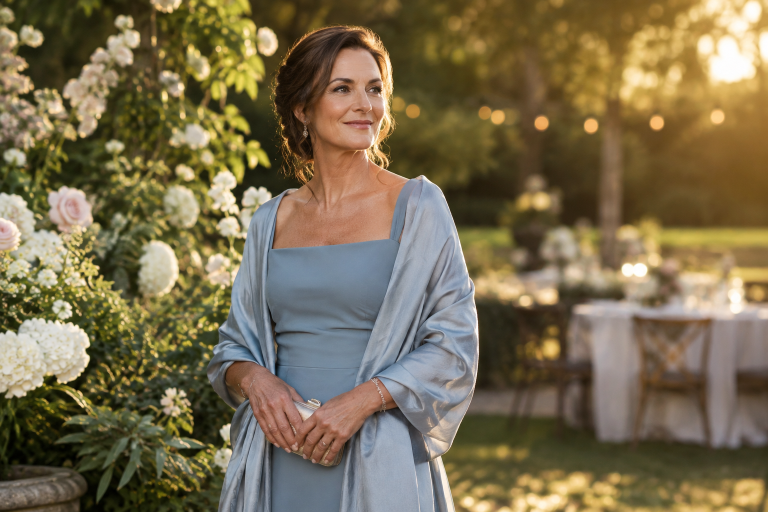
- Garden or vineyard: Soft movement, breathable materials, stable shoes, and understated floral or textured details work well outdoors.
- Beach or coastal ceremony: Choose an easy hem, secure footwear, and a lightweight layer for wind or cooler evening temperatures.
- Church or historic venue: Sleeves, a wrap, or a jacket can provide welcome coverage, while a graceful silhouette should feel comfortable when seated.
Use the Season as a Practical Guide
Spring outfits often benefit from light layers for cool mornings and evenings. Summer calls for breathable fabrics, comfortable linings, and shoes that stay comfortable all day. Fall weddings can support deeper colors, soft texture, sleeves, and richer accessories. For winter, crepe, satin, long sleeves, dressy wraps, and tailored coats can add warmth while preserving a formal appearance.
Choose a Color That Works in Photos
There is no universal color assigned to the mother of the groom. The best choice flatters the wearer, suits the event, and complements the wedding palette. Navy, muted blue, soft green, plum, taupe, rose, and metallic neutrals can be useful starting points, but the couple’s preferences should come first.
- Ask whether the wedding party or family has planned colors.
- Avoid white, ivory, or distinctly bridal-looking shades unless the couple approves them.
- Check the color in natural light, not only indoor fitting-room lighting.
- Consider whether the shade will blend into the venue, flowers, or backdrop in group photos.
Current mother-of-the-groom attire guidance also emphasizes balancing personal style with the dress code and wedding theme. Black can be a sophisticated option for a formal or evening event, while bold colors and patterns are best chosen with the overall visual plan in mind.
Compare Silhouettes Before Focusing on Details
Start with shape because a flattering, functional silhouette makes every other decision easier. Column and sheath dresses create clean, refined lines for formal indoor weddings. A-line and softly flared dresses offer comfortable movement for walking, sitting, and dancing. Midi and tea-length styles work especially well for cocktail, garden, and daytime weddings. Jumpsuits and dressy separates are equally valid alternatives, particularly for someone who prefers structure or does not want a traditional dress. Jacket dresses and coordinated layers can add coverage and warmth without making the outfit feel overly formal.
Prioritize Fit and Movement
A wedding day includes more movement than most special occasions. Before committing, test the outfit in realistic ways:
- Sit, stand, and walk several steps.
- Raise your arms to check the sleeves and shoulders.
- Try the outfit with the exact shoes and undergarments you plan to wear.
- Make sure the hem works on the expected surface.
- Leave time for hemming, sleeve adjustments, or other tailoring.
Coordinate Without Matching Exactly
The mother of the groom and the mother of the bride do not need identical outfits. A better approach is harmony: similar formality, complementary colors, and distinct personal style. Share ideas early, avoid duplicating the same dramatic pattern or statement detail, and use jewelry, wraps, or handbags to create individual character.
Build the Full Outfit
- Shoes: Select a pair appropriate for the venue and comfortable for extended wear.
- Jewelry: Keep the scale in balance with the neckline and dress details.
- Handbag: Choose a small bag for essentials that does not distract from the outfit.
- Wrap or jacket: Treat the layer as part of the planned look, not a last-minute addition.
- Final fitting: Try on every piece together before the wedding day.
A Simple Shopping Timeline
Begin several months before the wedding when possible. First, confirm the dress code, venue, season, and color preferences. Then shortlist a few silhouettes, shop or order early, schedule alterations, and complete the look with shoes and accessories. In the final week, test the complete outfit and prepare a suitable outer layer or weather backup.
Final Checklist
- The outfit suits the dress code, season, and venue.
- The color complements the wedding without copying the bridal party.
- The shoes are practical, and the outfit allows easy movement.
- Alterations are complete, and every accessory has been tested together.
The strongest mother-of-the-groom outfit feels authentic to the wearer while honoring the couple’s celebration. With the right balance of formality, comfort, coordination, and personal style, it can look polished from the ceremony through the final dance.
- A One-Day New York City, New York Skyline Itinerary: Landmarks, Light, and Smart Timing
- A Guide to Choosing a Mother-of-the-Groom Outfit by Venue, Season, and Dress Code
- How to Understand THCA Flower Labels, Lab Results, and Safety Details
- How To Keep Better Car Repair Records And Protect Your Options
- How to Choose Breathable Headwear for Outdoor Work, Events, and Team Programs

