

Car trouble is easier to manage when every visit, symptom, and repair attempt is documented in one place. Whether the concern is a warning light, rough shifting, an electrical issue, or an intermittent noise, a clear record helps you explain the history without relying on memory. For a model-specific example of recurring concerns, review what CTS owners are saying and compare those experiences with your own repair paperwork.
Good records do not automatically establish that a vehicle has a defect or that any particular remedy applies. They do, however, give owners a factual timeline that can support productive conversations with a repair shop, dealer, warranty administrator, insurer, manufacturer, or qualified consumer professional.
Why Car Repair Records Matter
Repair documents turn a frustrating series of appointments into an organized history. They show when a symptom first appeared, what the shop observed, which parts were tested or replaced, and whether the original issue returned. This matters because a warning light that comes back after three visits may look very different on paper than it does in a vague recollection months later.
Records can also clarify mileage, time out of service, expenses, and the exact language used to describe the concern. A stack of invoices alone is not necessarily enough to prove anything. The useful details are the dates, mileage, customer complaint, diagnostic findings, repair actions, and post-pickup results.
What To Save After Every Repair Visit
Request the final repair order before leaving the facility, then save it with the supporting materials. Keep digital copies when possible, even if you also maintain paper files.
- Repair orders, final invoices, and written estimates.
- Approval emails, text messages, and notes about phone calls.
- Diagnostic reports, warning codes, inspection results, and technician notes.
- A description of the parts replaced, adjusted, or reprogrammed.
- The date and mileage at drop-off and pickup.
- Receipts for towing, rental vehicles, rideshare trips, or other related costs.
- Photos and videos that show a dashboard warning, a leak, smoke, an unusual sound, or a visible condition.
How To Build A Clear Repair Timeline
A timeline does not need to be complicated. Start with the first day you noticed the issue, then add each event in date order. Use plain language and preserve the shop’s wording separately rather than trying to interpret technical findings yourself.
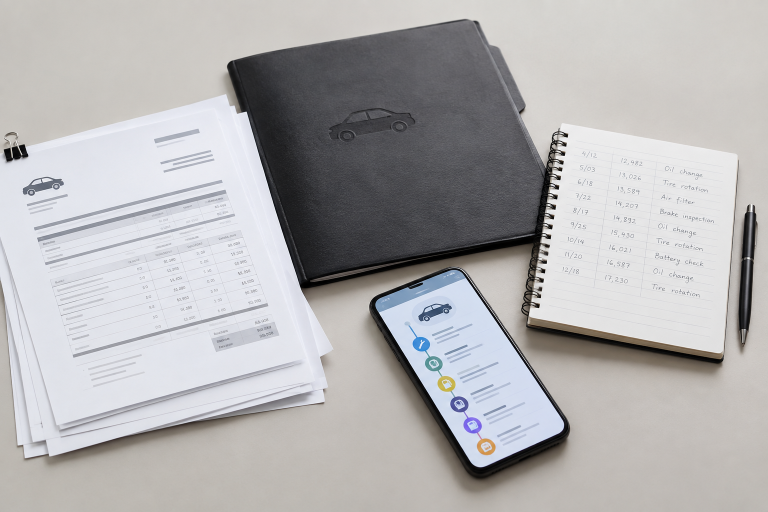
- Write the date, mileage, and driving conditions when the problem occurred.
- Describe the symptom, such as “engine stalled at a stoplight” or “check-engine light illuminated.”
- Note warning lights, odors, noises, vibrations, leaks, or changes in performance.
- Add every repair visit, including the shop’s diagnosis and work performed.
- Record whether the issue was resolved, returned, changed, or could not be duplicated.
- Track how long the vehicle was unavailable for use.
A spreadsheet, a notes app, a cloud folder, or a paper binder can work well. The important part is consistency. When records are scattered among a glove box, several inboxes, and old text threads, important dates and repeat visits are easy to overlook.
How To Spot A Repeating Vehicle Problem
Look for patterns without assuming every repeat symptom has the same cause. Compare repair orders for the same warning code, system, description, or condition. Also note whether a repair was completed, whether the vehicle was road-tested afterward, and how soon the concern returned.
A recurring issue may result from one unresolved cause, several related conditions, or a new problem that happens to feel similar. Ask the shop to put its diagnostic findings in writing. That request can help distinguish a confirmed finding from a preliminary suspicion.
How To Check Recalls And Manufacturer Communications
Owners should periodically check whether a safety recall applies to their specific vehicle. The federal VIN recall search can show unrepaired recalls associated with a vehicle and provide broader recall and manufacturer communication information.
Understand The Different Types Of Notices
- Safety recall: A manufacturer’s action involving a safety-related defect or a failure to meet a federal safety standard.
- Technical service bulletin: Repair guidance issued to service professionals about a symptom, diagnosis, or repair procedure.
- Service campaign: A manufacturer-supported program that may address a particular condition under specific terms.
A technical service bulletin does not necessarily mean a repair will be free. Eligibility can depend on warranty coverage, mileage, age, prior repairs, and the terms of any applicable program. Ask the dealer whether it checked for communications related to your reported symptom.
Questions To Ask The Repair Shop
Specific questions often lead to clearer records and fewer misunderstandings. Consider asking:
- What test supported the diagnosis?
- What systems or parts were ruled out?
- What work was completed today?
- What should I monitor after pickup?
- Which symptoms indicate the vehicle should be returned promptly?
- Can the diagnosis and repair plan be included on the repair order?
Plain-language explanations are reasonable to request. A repair record should be understandable to an owner who was not in the service bay and to anyone reviewing the timeline later.
What To Do When Repairs Do Not Work
If the issue returns, contact the shop promptly and describe what happened accurately. Share earlier repair orders, identify the date and mileage of the repeat event, and ask what the next diagnostic step is. If communication stalls, request assistance from a service manager and keep notes of each call, email, and in-person discussion.
Test the vehicle safely after repairs. If a problem involves braking, steering, stalling, smoke, fuel odor, overheating, or any other potential safety concern, avoid unnecessary driving and seek appropriate professional guidance.
Consumer Options To Consider
Available options vary by state, warranty terms, purchase type, vehicle age, and the nature of the concern. Review the warranty, purchase documents, and repair history before deciding how to proceed. You may also request a written response from the dealer, manufacturer, or warranty administrator and ask whether a dispute or arbitration process is available.
When the financial impact, safety concern, or loss of vehicle use becomes substantial, qualified advice may help you understand the choices available in your location. Do not assume that every repair dispute qualifies for the same outcome.
A Simple Recordkeeping System
Set up one master folder labeled with the vehicle’s year, make, model, and VIN. Create subfolders for repair orders, messages, photos, videos, and related expenses. Save text-message screenshots and emails as PDFs, then back up the folder to a secure cloud account.
Maintain a running log with these entries for every visit:
- Date of the repair visit.
- Vehicle mileage.
- Reported symptom.
- Shop finding or diagnosis.
- Work completed or parts installed.
- Final result: fixed, returned, changed, or unresolved.
Final Checklist For Vehicle Owners
- Keep every repair order, estimate, and invoice.
- Record dates, mileage, symptoms, and time out of service.
- Save photos, videos, and written communications.
- Ask for diagnostic findings and repair plans in writing.
- Check for recalls and relevant manufacturer communications.
- Track whether the same concern returns after repair attempts.
- Escalate concerns in writing when repairs do not resolve the issue.
Consistent recordkeeping turns a confusing vehicle problem into a usable timeline. By saving documents after every visit and carefully documenting recurring symptoms, owners can ask better questions, make better decisions, and preserve important information for future conversations.
- A One-Day New York City, New York Skyline Itinerary: Landmarks, Light, and Smart Timing
- A Guide to Choosing a Mother-of-the-Groom Outfit by Venue, Season, and Dress Code
- How to Understand THCA Flower Labels, Lab Results, and Safety Details
- How To Keep Better Car Repair Records And Protect Your Options
- How to Choose Breathable Headwear for Outdoor Work, Events, and Team Programs

